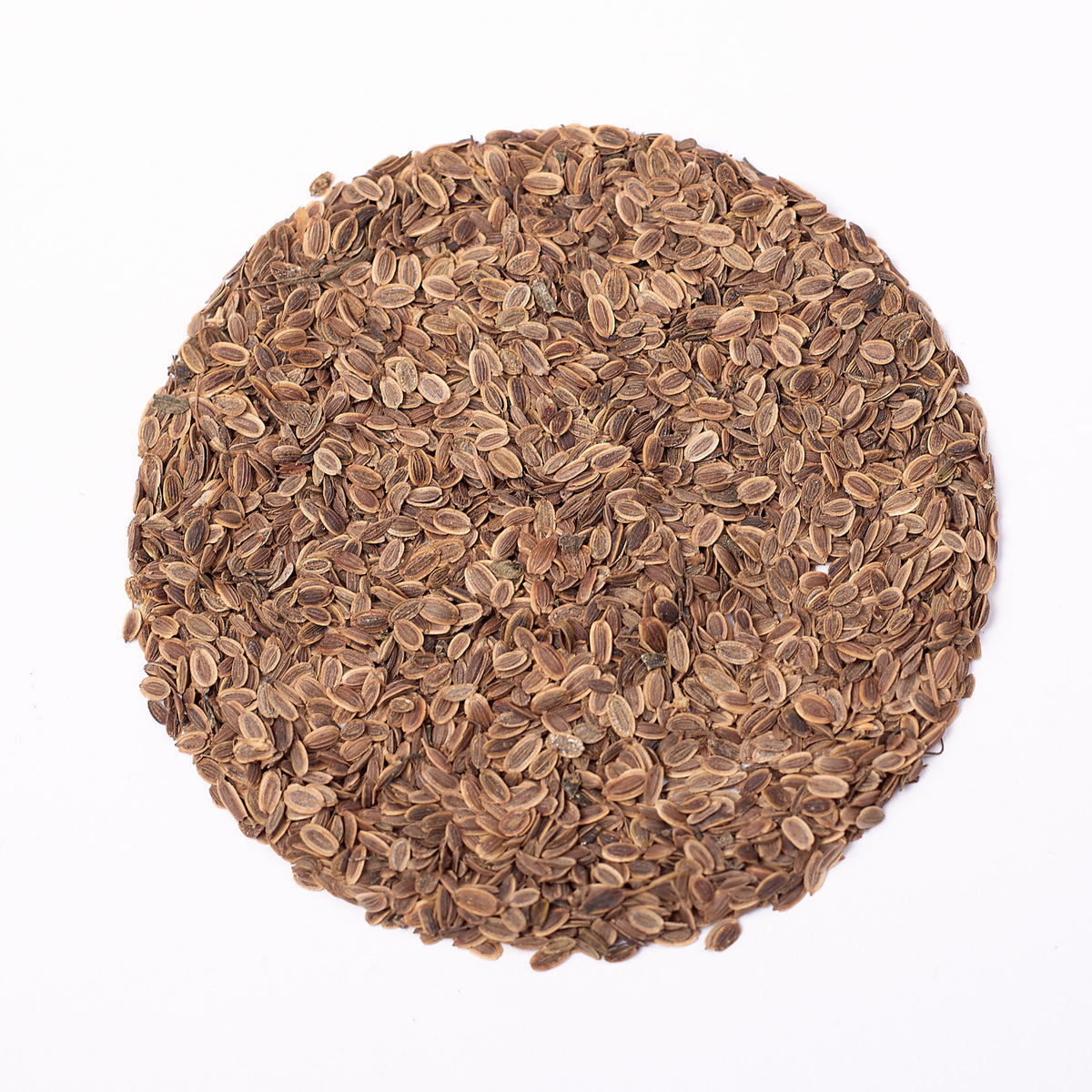
Dill Microgreens Seeds
Dill Microgreens Seeds
Couldn't load pickup availability
All the Dill Flavour, Four Times Faster
Dill microgreens are the young shoots of Anethum graveolens, a member of the carrot family alongside parsley, fennel and coriander. They grow as a soft green lawn of slender stems with narrow seed leaves, soon followed by the first feathery fronds. The taste is unmistakable: clean, slightly sweet, classic dill.
Why grow a microgreen of a herb you can buy fresh? Time and texture. Garden dill needs 40–45 days before you can cut it; microgreens are ready in about 12. And while the stems of a mature plant are tough and usually discarded, a dill microgreen is tender all the way down — every centimetre carries flavour.
Dill asks for a little preparation: soak the seeds for 10–12 hours, sow 25 g per 11×18 cm container on a mat, and germinate them under a light weight. After that its one real wish is fresh air — dill loves good ventilation. Each gram of seed gives about three grams of greens.
📋 Product Specifications
| Botanical name | Anethum graveolens |
| Common names | Dill, dill weed |
| Plant family | Apiaceae (carrot family) |
| Soaking | Yes — 10–12 hours |
| Growing medium | Linen mat, natural fabric, gauze, cotton wool, coco coir |
| Seeding rate | 25 g of seed per 11×18 cm container, sown soaked |
| Weighting | Yes — 0.5–1 kg on a stack of containers |
| Germination time | 5–6 days at 20–22 °C |
| Growth after germination | 4–6 days |
| Total time to harvest | 9–12 days |
| Harvest height | 6–10 cm |
| Yield (dry seed : cut greens) | ≈ 1 : 3 |
| Light | 10–15 hours a day, bright but indirect |
| Key requirement | Good air circulation |
How to Grow Dill Microgreens
Dill is not difficult, but it rewards attention to three things: a proper soak, a mat that lets you control moisture and plenty of fresh air. Get those right and you will cut a dense, fragrant tray in under two weeks.
Step-by-Step Growing Guide
Soak the seeds
Cover the seeds with room-temperature water and leave them for 10–12 hours — overnight is perfect. Then drain them well in a sieve.
Prepare the mat
Line an 11×18 cm container (a berry punnet works well) with a linen mat, natural fabric, gauze, cotton wool or coco coir. Mats make it easiest to control moisture. Wet evenly and pour off the excess.
Sow evenly
Spread 25 g of soaked seed over the surface in an even layer, without heaps. A spoon or fork helps to separate seeds that stick together.
Stack and weigh down
Stack the containers, cover the top one with an empty box or lid and place a 0.5–1 kg weight on it.
Germinate for 5–6 days
Keep the stack in the dark at about 20–22 °C. Open and air it every day — dill needs regular ventilation from the very start.
Move into the light
When the shoots lift the weight, unstack and give them 10–15 hours of light a day. Bright but indirect sunlight or a grow lamp is ideal.
Mist gently, keep the air moving
Water sparingly with a spray bottle. Leave space between trays, and don’t close them in a cupboard: moving air keeps the fine stems dry and healthy.
Harvest at 6–10 cm
After 4–6 days in the light, cut the greens just above the mat with sharp scissors. The taller you let them grow, the more feathery leaves you get.
What Makes Dill Smell Like Dill
The scent of dill comes from its essential oil. Its main aroma compounds include carvone and limonene, together with dill ether, the compound most typical of the fresh herb. In microgreens the whole shoot is tender, so all of that aroma ends up on the plate rather than on the compost heap.
Four Times Faster
Garden dill takes 40–45 days to cutting size. Microgreens are ready in about 12 — fresh dill almost on demand.
Tender to the Stem
Mature dill stems are too tough to eat. Microgreen stems are soft, so you use the entire cut.
Aroma From Essential Oil
Carvone, limonene and dill ether give the classic scent — strongest when the greens are cut just before serving.
Flavour Without Extra Salt
A pinch of fresh dill makes potatoes, fish and cucumber taste fuller, so you can ease off the salt.
Fresh Dill All Winter
A windowsill tray gives you fresh dill in the months when supermarket bunches are limp and expensive.
A Classic Herb Family
Dill belongs to the Apiaceae, the family that also gave kitchens parsley, coriander, fennel and caraway.
🧬 What’s Inside
| Aroma compounds | Carvone, limonene, dill ether |
| Where the aroma sits | Essential oil in leaves and stems |
| Plant family | Apiaceae — related to parsley, fennel, coriander and celery |
| Edible part | The whole cut shoot — stem and leaves |
How to Use Dill Microgreens
Use them exactly as you would fresh dill — only more generously, because the whole shoot is tender. Add them raw at the last moment; they go well with garlic, onion, tomato, lemon and anything creamy.
🐟 Fish
- Smoked salmon and gravlax
- Fishcakes and fish pie
- Prawn sandwiches
🥔 Potatoes
- New potatoes with butter
- Potato salad
- Jacket potatoes with soured cream
🥒 Salads & Dressings
- Cucumber salad
- Yoghurt and soured-cream dressings
- Tomato and red onion salad
🥚 Eggs
- Scrambled eggs and omelettes
- Egg mayonnaise
- Devilled eggs
🍲 Soups
- Beetroot soup and chilled cucumber soup
- Chicken broth
- Creamy potato soup
🥐 Baking & More
- Savoury scone and pie fillings
- Cream cheese on bagels
- Green smoothies with cucumber
Frequently Asked Questions
Share