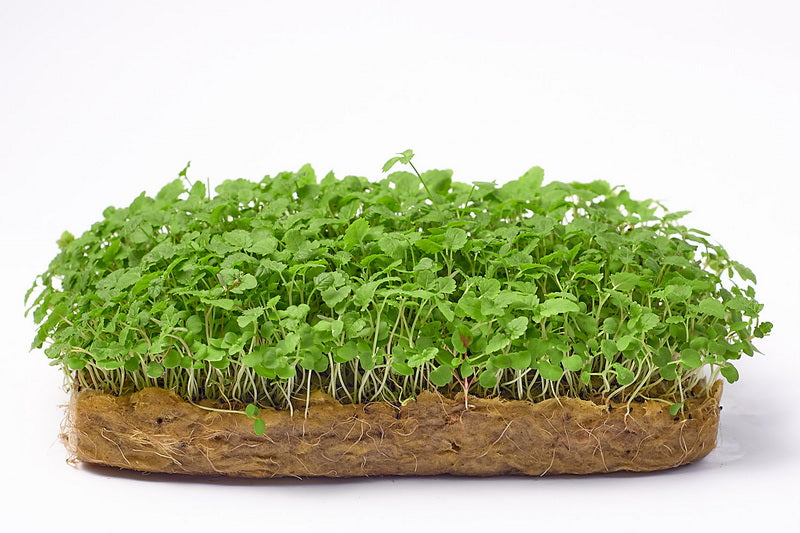
Melissa Lemon Balm Microgreens Seeds
Melissa Lemon Balm Microgreens Seeds
Couldn't load pickup availability
Lemon Flavour Grown on Your Windowsill
Melissa lemon balm smells of lemon but belongs to the mint family (Lamiaceae), alongside basil and rosemary. Its name comes from the Greek word for honeybee — beekeepers have planted it beside their hives since antiquity. As a microgreen it gives you the full perfume of the herb in a compact tray, ready to cut in under three weeks.
The secret is timing. The first seed leaves (cotyledons) are mild; the characteristic lemon aroma comes through with the first true leaves. That is why lemon balm needs a few more days than fast crops such as radish — and those extra days are exactly what turn a green sprout into a real herb.
Seeds are sown dry, with no soaking, on cotton pads or coco coir, and a light weight during germination gives an even, well-rooted stand. One gram of seed yields roughly ten grams of fragrant greens, so a small pack goes a long way.
📋 Product Specifications
| Botanical name | Melissa officinalis |
| Common names | Lemon balm, melissa, sweet balm |
| Plant family | Lamiaceae (mint family) |
| Soaking | Not required |
| Growing medium | Cotton pads / cotton wool, coco coir |
| Seeding rate | 1 g dry seed per 11×18 cm container |
| Weighting | Yes — 0.5–1 kg on a stack of containers |
| Germination time | 4–5 days at 20–22 °C |
| Growth after germination | 8–14 days |
| Total time to harvest | 12–19 days |
| Harvest height | 3–6 cm |
| Yield (dry seed : cut greens) | ≈ 1 : 10 |
| Harvest stage | Once the first true leaves have formed |
How to Grow Lemon Balm Microgreens
Lemon balm is not the fastest microgreen, but it is a rewarding one once you know its two rules: weigh it down during germination and wait for the true leaves. Follow the steps below and a small container will give you a dense carpet of lemon-scented greens.
Step-by-Step Growing Guide
Moisten the medium
Line an 11×18 cm container (a berry punnet is ideal) with cotton pads, cotton wool or coco coir. Wet it evenly, then pour off any standing water — moist, not flooded.
Sow dry and evenly
Scatter 1 g of dry seed over the surface. The seeds are tiny, so sow from a folded sheet of paper to avoid clumps. Do not cover them.
Mist gently
Spray the surface with a fine mist so the seeds settle onto the medium. A strong stream of water will wash them into the corners.
Stack and weigh down
Stack the sown containers, cover the top one with an empty box or lid and put a 0.5–1 kg weight on top. The gentle pressure helps the roots anchor and makes germination even.
Keep dark and warm
Leave the stack in a dark place at 20–22 °C for 4–5 days. Check once a day: the medium should stay moist, and a quick airing keeps the air fresh.
Move into the light
When the seedlings lift, remove the weight and unstack. Give the containers bright light — a sunny windowsill or a grow lamp for 12–16 hours a day.
Water from below
Pour water under the medium rather than over the leaves. Dry foliage and good airflow are the best protection against mould at this delicate stage.
Harvest at true leaves
After 8–14 days in the light, when the first true leaves are open and the greens stand 3–6 cm tall, cut just above the medium with sharp scissors.
Why Lemon Balm Earns Its Place
Lemon balm has been part of European herbal tradition for centuries. Its fresh leaves carry an essential oil rich in citral and citronellal — the compounds behind the lemon scent — together with rosmarinic acid, a polyphenol typical of the mint family. Grown as a microgreen, it goes from container to plate within minutes, at the peak of its aroma.
A Herbal-Tea Classic
Lemon balm tea has been an evening ritual for generations. A handful of fresh microgreens makes a particularly fragrant cup.
Rich in Rosmarinic Acid
Like rosemary and basil, lemon balm contains rosmarinic acid — a plant polyphenol whose antioxidant properties are studied in laboratory research.
Lemon Without the Acid
It gives drinks and desserts a lemon lift without adding acidity — useful when lemon juice would be too sharp.
More Flavour, Less Sugar
An aromatic herb makes lemonades, fruit salads and yoghurt taste fuller, so you can reach for less sugar.
The Honeybee Herb
“Melissa” means honeybee in Greek, and beekeepers have grown it for centuries — a nice story to share at the table.
Fresh Beats Dried
The aromatic oils in lemon balm are volatile and fade as the herb dries. Microgreens cut minutes before serving keep their full perfume.
🧬 What’s Inside the Leaf
| Aroma compounds | Citral (geranial and neral), citronellal |
| Polyphenols | Rosmarinic acid, caffeic acid derivatives |
| Flavonoids | Luteolin glycosides |
| Plant family | Lamiaceae — related to mint, basil and rosemary |
How to Use Lemon Balm Microgreens
Treat lemon balm microgreens as a finishing herb: they shine raw, added at the very last moment. Their lemon-and-mint perfume works on both sides of the menu — sweet and savoury.
🥤 Drinks
- Homemade lemonade and iced tea
- Infused water with cucumber or strawberry
- A lemony twist on a mojito or spritz
🍓 Desserts & Fruit
- Strawberries, peaches, melon and fruit salads
- Panna cotta, sorbet and lemon tart
- Dark chocolate — lemon and cocoa are a classic pair
🥗 Salads
- Cucumber, tomato and feta salads
- Green salads with a honey-lemon dressing
- Mixed microgreen blends for colour and scent
🐟 Fish & Seafood
- Trout and white fish, straight onto the plate
- Prawns and ceviche
- Smoked salmon on rye bread
🥣 Breakfast & Dairy
- Greek yoghurt with honey and berries
- Ricotta or fresh cheese on toast
- Overnight oats and smoothie bowls
🫙 Sauces & Butters
- A lemony pesto — half basil, half melissa
- Herb butter for grilled chicken or fish
- Light vinaigrettes and yoghurt sauces
Frequently Asked Questions
Share