Onion Microgreens Seeds
Onion Microgreens Seeds
Couldn't load pickup availability
Spring Onion Flavour in Under Two Weeks
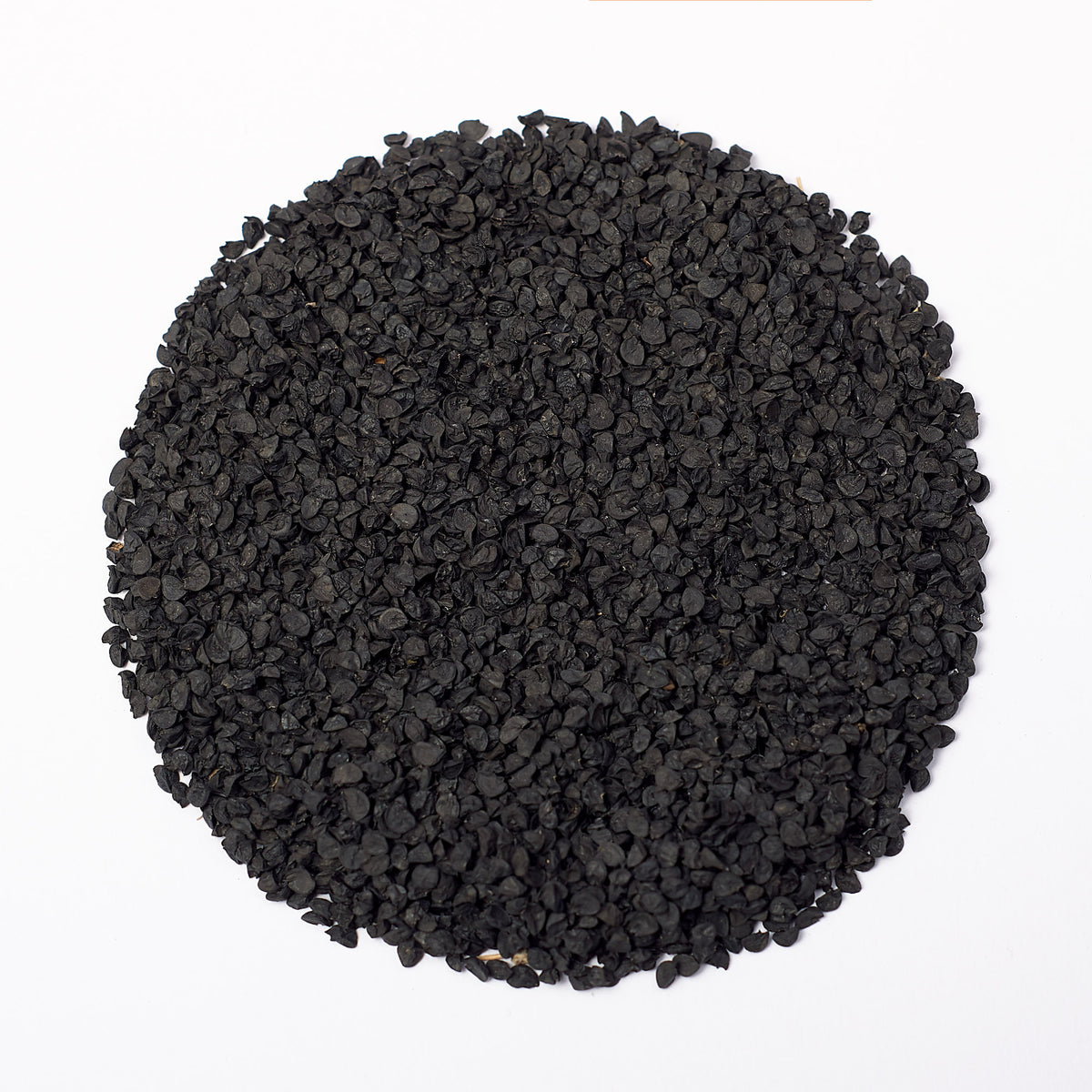
Onion microgreens are the young shoots of the common onion, Allium cepa — the same plant that gives us bulbs, harvested long before any bulb forms. They grow as a dense carpet of thin, upright green threads, many of them still wearing the tiny black seed coat on top. The flavour is unmistakably onion, yet softer and sweeter than a raw bulb, somewhere between chives and a young spring onion.
For an allium they are quick: 5–6 days to germinate and only 4–5 more in the light, so the whole cycle takes 9–11 days. Seeds are sown dry, without soaking, and generously — 12 g per 11×18 cm container — because the fine shoots stand best shoulder to shoulder. A light weight during germination keeps the stand even.
Their best trick is the root. Grown on a linen mat or fabric, onion microgreens form a clean, white root pad that lifts out in one piece. Harvested with roots, the greens keep fresh longer than cut herbs — handy for home meal prep, and a favourite format of small growers who sell at markets or to restaurants.
📋 Product Specifications
| Botanical name | Allium cepa |
| Common names | Onion, bulb onion |
| Plant family | Amaryllidaceae (formerly Alliaceae) |
| Soaking | Not required |
| Growing medium | Linen mat, natural fabric, cotton wool, coco coir |
| Seeding rate | 12 g dry seed per 11×18 cm container |
| Weighting | Yes — 0.5–1 kg on a stack of containers |
| Germination time | 5–6 days at 20–22 °C |
| Growth after germination | 4–5 days |
| Total time to harvest | 9–11 days |
| Harvest height | 5–7 cm |
| Yield (dry seed : cut greens) | ≈ 1 : 5 |
| Harvest options | Cut with scissors, or pull out with roots (best on fabric) |
How to Grow Onion Microgreens
Onion is easy to grow once you respect its character: sow thickly, keep it under weight while it germinates and choose fabric if you want to harvest with roots. From sowing to plate takes less than two weeks.
Step-by-Step Growing Guide
Prepare the mat
Line an 11×18 cm container (a berry punnet works perfectly) with a linen mat or a piece of natural fabric. Cotton wool and coco coir work too, but fabric is the one to choose if you want to harvest with roots. Moisten evenly and pour off the excess.
Sow thickly and dry
Spread 12 g of dry seed over the surface in an even layer — the seeds may touch. Onion shoots are thin, and a dense sowing gives a full, upright carpet.
Mist the seeds
Spray with a fine mist so every seed sits in contact with the wet mat. Don’t cover the seeds.
Stack and weigh down
Stack the containers, cover the top one with an empty box or lid and set a 0.5–1 kg weight on it. The pressure keeps the seeds against the mat and helps the roots grip the fabric.
Dark and warm for 5–6 days
Keep the stack in a dark place at 20–22 °C. Check once a day that the mat stays moist and air the stack briefly.
Into the light
When the shoots start lifting the weight, remove it, unstack and move the containers to bright light — a sunny windowsill or 12–16 hours a day under a grow lamp.
Water from below
Add water under the mat rather than over the shoots. The fine stems stay upright and dry, which keeps them clean and helps prevent mould.
Harvest at 5–7 cm
After 4–5 days in the light, cut just above the mat — or lift the whole root pad off the fabric and pull the greens out with their roots.
What the Onion Family Brings to Your Plate
Onions belong to the Allium genus, a group known for its sulfur compounds — the source of that sharp onion aroma — and for flavonoids such as quercetin, for which onions are well known in nutrition research. Microgreens deliver the familiar flavour in a gentler, fresher form, straight from the tray.
Onion Flavour, No Tears
There is no bulb to chop — you just snip the greens. All the flavour, without watery eyes or onion-scented hands.
Sulfur Compounds
When onion cells are cut, sulfur-containing compounds are released. They create the typical onion bite and are one of the most studied features of the allium family.
A Flavonoid Source
Onions are among the best-known dietary sources of quercetin, a plant flavonoid researched for its antioxidant properties.
Flavour Without Extra Salt
A handful of onion greens makes eggs, potatoes and dips taste fuller, so you can go easier on the salt.
Fresh Greens All Winter
Ready in 9–11 days on a windowsill, onion microgreens keep fresh green flavour on the table when the garden is empty.
Live Harvest With Roots
Pulled with roots and kept cool, the greens stay fresh for longer than cut herbs — useful for meal prep and for selling.
🧬 What’s Inside the Shoot
| Aroma compounds | Sulfur compounds (thiosulfinates), released when the cells are cut |
| Flavonoids | Quercetin and its glycosides — typical of onions |
| Plant family | Amaryllidaceae — related to chives, leek and garlic |
| Edible part | Green shoots; roots are trimmed before serving |
How to Use Onion Microgreens
Use onion microgreens anywhere you would reach for chives or the green tops of spring onions — raw and at the last moment, so they stay crisp and bright.
🥚 Eggs
- Scrambled eggs and omelettes, after cooking
- Devilled eggs and egg salad
- Avocado toast with a soft-boiled egg
🥔 Potatoes
- Jacket potatoes with sour cream
- Potato salad and mash
- Rösti and potato pancakes
🥗 Salads & Bowls
- Tomato and cucumber salads
- Grain and noodle bowls
- Microgreen mixes that need some bite
🍣 Fish & Asian Dishes
- Sushi, poke and ramen
- Smoked mackerel or salmon
- Stir-fries — scattered on top to serve
🧀 Dips & Spreads
- Cream cheese and soured cream dips
- Hummus and tzatziki
- Herb butter for steak and grilled corn
🥪 Sandwiches & Snacks
- Cheese toasties
- Burgers and wraps
- Crackers with soft cheese
Frequently Asked Questions
Share