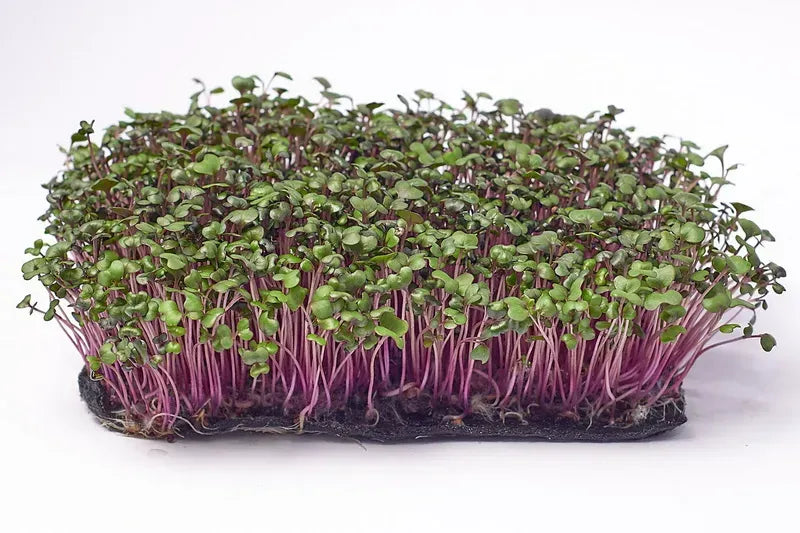
Семена Микрозелени Капуста Фиолетовая (Краснокочанная)
Семена Микрозелени Капуста Фиолетовая (Краснокочанная)
Не удалось загрузить сведения о доступности самовывоза
Микрозелень-Суперфуд, о Которой Говорит Наука
Микрозелень краснокочанной капусты — ботанически Brassica oleracea — это молодые нежные ростки краснокочанной капусты, срезанные сразу после раскрытия первых листочков. Их мгновенно узнают по ярким розово-фиолетовым стеблям, увенчанным тёмно-зелёными сердцевидными семядолями — цветовая палитра, которая делает их одним из самых красивых украшений на любой кухне.
Но главное — внутри. Эпохальное исследование 2012 года, проведённое Сяо и коллегами (Xiao et al.) в Университете Мэриленда и USDA, проанализировало 25 видов микрозелени и поставило краснокочанную капусту в число самых богатых нутриентами — с концентрацией витаминов, многократно превышающей зрелый овощ.
Выращенная из премиальных семян итальянского происхождения, наша краснокочанная капуста обеспечивает стабильную всхожесть, яркий цвет и характерный сладко-хрустящий вкус с лёгкой перечной ноткой — заметно мягче зрелой капусты. Быстрорастущая и прощающая ошибки новичкам, готова к срезке всего за 7–10 дней.
📋 Характеристики товара
| Ботаническое название | Brassica oleracea |
| Народные названия | Краснокочанная капуста, капуста фиолетовая, капуста красная |
| Семейство | Brassicaceae (Капустные / Крестоцветные) |
| Происхождение семян | Италия 🇮🇹 |
| Тип семян | Необработанные, премиальное качество |
| Всхожесть | ≥ 98% |
| Срок прорастания | 2–4 дня |
| Срезка | 7–10 дней (стадия семядолей) |
| Норма высева | ~4 г на стандартный лоток (10×20 см) |
| Субстрат | Кокосовый субстрат / Льняной коврик / Агровата |
| Замачивание | Не требуется — сеять сухими |
| Тёмная фаза | 2–4 дня |
| Вкусовой профиль | Сладкий, хрустящий, мягкий с перечной ноткой |
| Сложность выращивания | Лёгкая — идеально для начинающих |
| Доступные фасовки | 100 г / 250 г / 500 г |
Сравнительные данные по Xiao et al. (2012), J. Agric. Food Chem., Университет Мэриленда и USDA.
Как Вырастить Микрозелень Краснокочанной Капусты
Краснокочанная капуста — одна из самых дружелюбных к новичкам микрозеленей. Она быстро прорастает, надёжно растёт и радует ярким цветом примерно за неделю. Без замачивания, без хлопот — следуйте этим шагам для идеального лотка каждый раз.
Пошаговое Руководство по Выращиванию
Замачивание не нужно
Семена краснокочанной капусты мелкие и легко прорастают — замачивать их не нужно. Сейте их сухими прямо на подготовленный субстрат для лучшего результата.
Подготовка субстрата
Используйте кокосовый субстрат, льняной коврик или агровату — все три варианта отлично подходят. Увлажните субстрат так, чтобы он был влажным, но не мокрым. Обеспечьте хороший дренаж.
Густой равномерный посев
Равномерно рассейте семена — около 4 г на стандартный лоток 10×20. Краснокочанная капуста хорошо переносит густой посев. Засыпать субстратом не нужно — просто опрыскайте семена.
Тёмная фаза
Накройте вторым лотком (или тёмным куполом) на 2–4 дня. Держите в тепле при 18–22 °C и опрыскивайте раз в день при подсыхании поверхности. Эта тёмная фаза формирует крепкие высокие стебли.
Выставление на свет
Как только ростки приподнимут крышку и стебли будут бледными, переставьте на яркий свет или под фитолампу (6–10 ч/сутки). За несколько часов листья зеленеют, а стебли становятся ярко-фиолетовыми — это фотосинтез строит питательные вещества.
Полив снизу
Перейдите на нижний полив — поставьте лоток в неглубокую ёмкость с водой на несколько минут. Это держит листья сухими и предотвращает плесень — главный риск для микрозелени капустных.
Обеспечьте циркуляцию воздуха
Хорошая вентиляция — лучшая защита от плесени. Лёгкий вентилятор на пару часов в день держит листву сухой, а ростки крепкими. Избегайте переувлажнения.
Срезка на пике цвета
Срезайте на 7–10 день, когда семядоли полностью раскрыты и ярко окрашены. Срезайте чистыми ножницами чуть выше субстрата. Вкус меняется каждый день — пробуйте, чтобы найти предпочтительную стадию.
Нутриентная Мощь, Подтверждённая Реальной Наукой
Микрозелень краснокочанной капусты не просто питательна — это одна из немногих микрозеленей с рецензируемыми исследованиями за её заявлениями о пользе. Эпохальное исследование Xiao et al. (2012) установило её исключительную витаминную плотность, а исследование 2016 года в Journal of Agricultural and Food Chemistry продемонстрировало измеримую пользу для сердечно-сосудистой системы.
Сердце и холестерин
В исследовании 2016 года микрозелень краснокочанной капусты снижала «плохой» холестерин ЛПНП, уменьшала триглицериды печени и ограничивала набор веса у мышей на жирной диете — превосходя зрелую капусту.
Антиоксидантная защита
Яркий фиолетовый цвет дают антоцианы — мощные антиоксиданты (та же группа, что в чернике), которые борются с окислительным стрессом и поддерживают здоровье клеток.
Противораковые соединения
Как представитель капустных, краснокочанная капуста богата сульфорафаном и глюкозинолатами — соединениями, широко изученными на предмет способности блокировать и замедлять рост раковых клеток.
Витамин C и иммунитет
С примерно 6× витамина C по сравнению со зрелым кочаном эта микрозелень — мощный продукт для поддержки иммунитета, особенно ценный осенью и зимой.
Витамин K и кости
Содержа до 69× витамина K зрелого овоща, микрозелень краснокочанной капусты поддерживает здоровую минерализацию костей и нормальную свёртываемость крови.
Пищеварение и детокс
Богата клетчаткой и соединениями, активирующими путь детоксикации Nrf2, поддерживает здоровье кишечника и естественные процессы очищения организма.
🧬 Полный Нутриентный Состав
| Витамины | C, E (токоферолы), K, A (бета-каротин), группа B (тиамин, ниацин, фолиевая кислота) |
| Минералы | Кальций (Ca), Железо (Fe), Магний (Mg), Калий (K), Фосфор (P), Йод (I), Сера (S) |
| Антиоксиданты | Антоцианы, лютеин, зеаксантин, виолаксантин, полифенолы, флавоноиды |
| Фитосоединения | Сульфорафан, глюкозинолаты, изотиоцианаты |
| Макронутриенты | 20–25% белка (сухой вес), много клетчатки, мало жиров и калорий |
| Выдающийся показатель | До 6× витамина C, 40× витамина E, 69× витамина K vs зрелый кочан |
Цвет, Хруст и Сладко-Перечная Нотка
Микрозелень краснокочанной капусты — мечта шефа: её электрически-фиолетовые стебли и сладкий, мягко-перечный хруст преображают любую тарелку. Мягче зрелой капусты и приятно сладкая, она нравится почти всем, включая детей. Всегда добавляйте её в сыром виде или в самый последний момент, чтобы сохранить цвет и питательную ценность.
🥗 Салаты и боулы
- В салаты для всплеска цвета и перечного хруста
- Прекрасно сочетается с яблоком, морковью, орехами и цитрусовыми заправками
- Идеальная основа для ярких будда-боулов и зерновых боулов
- В современную интерпретацию салата коул-слоу с тёртыми овощами
🥪 Сэндвичи и роллы
- В сэндвичи и обёртки для хруста и цвета
- Одинаково хороша с вегетарианскими и мясными начинками
- Великолепна в спринг-роллах с креветками, тофу или овощами
- Свежий хрустящий апгрейд для бургеров и бейглов
🍽️ Высокая кухня и подача
- Ярко-фиолетовые стебли — гарнир ресторанного уровня
- Эффектна на канапе, тартаре и тарелках с копчёной рыбой
- Яркий акцент на крем-супах и биске
- Украшение для сырных тарелок и мясных ассорти
🍣 Суши и азиатские блюда
- В роллы для цвета, хруста и пользы
- Посыпать поке-боулы и блюда с рисом
- Свежий топпинг для рамена и супов с лапшой (сняв с огня)
- Сочетается с кунжутом, имбирём и соевым соусом
🥚 Яйца и завтрак
- В омлеты, фриттату и яичницу-болтунью
- На тост с авокадо для цвета и питательного буста
- Для украшения завтрак-боулов и солёной каши
- Перечная нотка для блюд из яиц на бранч
🥤 Смузи и соки
- В смузи для концентрированного питательного буста
- В холодные прессованные соки с яблоком и огурцом
- С йогуртом и ягодами для дозы антиоксидантов
- Мягкий вкус смешивается, не доминируя
Часто Задаваемые Вопросы
Поделиться